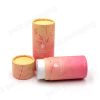
You can source packaging products from packaging manufacturers, packaging wholesalers, and online B2B marketplaces. For custom sizes and printed packaging, start with a manufacturer that offers the dispensing structure you need. For a small trial using standard tubes, ask wholesalers about available stock and minimum quantities.
Pack Packaging supplies push-up and twist-up paper deodorant tubes, with product examples linked below. Before placing a bulk order, compare the complete material construction, MOQ per design, sample terms, and delivery costs. Then test a sample with your actual formula and filling process.
The right purchasing channel depends on how much of the packaging you need to customize and when you need it delivered.
| Purchasing channel | When to consider it | What to establish before ordering |
|---|---|---|
| Direct paper tube manufacturer | Custom dimensions, branded printing, or repeat production runs | Materials and mechanism, MOQ per size and artwork, sample specification, and production schedule |
| Packaging wholesaler or distributor | A launch trial or a standard tube available from stock | Actual stock quantity, warehouse location, available sizes, and reorder availability |
| B2B marketplace | Finding and comparing potential suppliers | Who manufactures the tube, which specification the advertised price covers, and how samples and inspections are arranged |
When contacting a wholesaler, distinguish stock held in its warehouse from a product made after ordering. A standard size does not necessarily mean immediate availability.
A marketplace is a supplier discovery channel. The company behind each listing may be a manufacturer or a trading business. Ask who will handle technical changes, approve the sample, and take responsibility for an order that does not match the agreed specification.
Send shortlisted suppliers the same brief. A quotation for an unprinted push-up tube cannot be compared directly with one for a custom-printed twist-up tube with a different liner and mechanism.
Both formats can have a paperboard exterior, but their dispensing systems and internal materials can differ substantially.
A push-up tube raises the stick when the customer presses the movable base. Start here if you want this simple dispensing action, then check the base movement and the customer's grip on a filled sample.

Check whether the stick advances without excessive force and stays in position during application. Repeat the check after storage: a fresh fill and a stored stick may behave differently. Inspect the base and side seam for oil staining or product leakage.
A twist-up tube uses a rotating base to advance the product. Check the movement through the usable travel of the mechanism, including after filling, cooling, and storage. If you need the stick to retract, confirm that function on the selected design with the finished formula.

A paper exterior does not establish that the entire tube is plastic-free. The twist-up example linked here lists paperboard and PP plastic in its material specification. Review the body, liner, base, mechanism, and cap together when selecting a construction or describing it to customers.
The following are product-specific listings checked on 18 November 2026. Use them to identify a starting design and request a current quotation.
| Specification | Printed push-up example | Printed twist-up example |
|---|---|---|
| Listed material | Recyclable paperboard | Paperboard / PP plastic |
| Listed capacities | 0.3, 0.5, 1, 1.5, and 2 oz; customization offered | 6, 8, 18, 30, 50, 55, and 65 g |
| Size and color | Custom options listed | Custom options listed |
| Printing | Offset and silkscreen listed | Offset and silkscreen listed |
| Listed sample time | 5–7 days | 5–7 days |
| Listed MOQ | Not specified in this product's specification table | 1,000 pieces |
Sources: push-up specification and twist-up specification.
These figures do not establish the MOQ or delivery schedule for every product in the range. Confirm how the requirement applies to each size, artwork, and finish. Ask what the sample time includes and when the clock starts.
For other listed options, compare the oval push-up product page and deodorant and balm twist-up product page.
Treat the listed capacity as a starting reference. Your actual net fill weight depends on the formula and usable fill volume. Approve the internal dimensions, filling clearance, and finished fill weight together rather than choosing a tube from its outer height alone.
Wholesale pricing depends on the tube specification and the production quantity. Request a written breakdown covering:
Compare the total cost of getting the specified packaging to your filling site. A lower unit price can be offset by separate setup charges or higher freight costs. Ask each supplier to identify what its quotation includes and excludes.
MOQ also needs to be defined precisely. Ask whether it applies per tube size, printed design, color, or complete order. If you are launching several scents, provide the quantity of each artwork version and ask whether they can share a production run.
For a smaller first order, ask about an existing size and structure, a simpler finish, or standard tubes that can accept your label. Have the supplier confirm what is available and how the label will fit around the tube and cap.
Keep sample development, artwork approval, mass production, and transport as separate steps in the schedule. The listed 5–7-day sample time above is not a promise that a finished bulk order will arrive in that period.
A product photograph can help you shortlist a design. A filled sample lets you assess whether it will work for your product.
Ask whether the sample uses the liner, adhesives, base, and mechanism proposed for your order. A sample made to show printing may not represent the final construction. Use a production-equivalent sample for functional approval.
| Check | What to observe on the filled sample |
|---|---|
| Filling and cooling | Fill using the planned process. Check for distortion, leakage, shrinkage gaps, and changes in base or mechanism movement. |
| Formula contact | Inspect the liner, side seam, and base for staining, swelling, softening, or separation during storage. |
| Dispensing | Check push force or turning action, product stability during application, and any required retraction. |
| Opening and closing | Check cap fit before and after repeated use, plus residue around the rim. |
| Handling and delivery | Use the intended shipping pack. Inspect cap retention, tube damage, and dispensing after handling and temperature exposure relevant to the route. |
Agree on storage conditions, duration, and acceptance criteria with your formulation and filling teams. Record the formula batch and packaging specification so a later change to the liner or mechanism can be assessed against the approved sample.
If you are developing a refill system, check the refill against the case it must fit. A standalone deodorant tube is not automatically a compatible refill cartridge. Our guide to shipping refillable deodorant cartridges covers additional fit and handling checks.
Pack Packaging's customized service page lists CMYK/Pantone colors, kraft, coated and specialty papers, and finishes including hot stamping, embossing, and UV effects. Ask which options suit your selected tube.

Approve the dieline before finalizing artwork. Check where the wrap seam, cap edge, and moving parts fall so important text stays visible. Use a printed sample to review color, small lettering, and finish placement.
For material claims, request the complete component list. Recyclability, compostability, and plastic content cannot be established from the appearance of the paper exterior. Ask for evidence covering the selected construction and check disposal options in the market where it will be sold.
The manufacturing and quality page shows equipment photographs, describes production processes, and displays FSC and ISO 9001 certificate images. If your purchase requires certification, request current documents and check their scope against the company, material, and order being quoted.

Before approving production, agree on dimensional tolerances, cap fit, dispensing performance, print quality, inspection arrangements, and how deviations will be handled. Keep the signed sample and written specification as the order reference.
Send Pack Packaging one brief containing:
If you do not have dimensions yet, send the target fill weight, reference packaging, and filling information. These details give us a starting point for proposing a tube to sample.
Request a wholesale deodorant tube quote with your brief, or browse the deodorant paper tube range to select a reference design.
Ask about stock tubes or an existing sample design. Availability and minimum quantities depend on the supplier. For a custom order, confirm sample fees and whether the sample matches the materials and mechanism proposed for production.
No. The printed twist-up example above lists 1,000 pieces. That figure should not be applied to every push-up tube, artwork combination, or custom size. Obtain a project-specific MOQ in the quotation.
They may be suitable, but the formula and packaging must be tested together. Check the liner, seams, base, and dispensing action using the intended filling process and storage conditions. The word “natural” does not establish compatibility.
It depends on the design. The linked Pack Packaging twist-up example lists PP plastic alongside paperboard. Request the complete material specification if excluding plastic is a requirement.
Check each formula in the proposed tube. Differences in fill behavior, oil content, hardness, or product adhesion can change how the package performs. Also confirm the net fill weight for each formula.
Request separate estimates for sampling, artwork approval, production, and shipping. Confirm the schedule against your chosen construction, quantity, destination, and required arrival date before placing the order.